Photography: Ivy's Kopiaste.org Brings Us A Lovely Photographic Travelogue to CyprusCuisine: DELICIOUS -- NO-FAIL MODERN CYPRUS EASTER BREAD (“FLAOUNES”)Videography: Come and visit "Cyprus Life" for short movies with places that is impossible not to love

Thursday, May 11, 2006

Cypriot journalist rejects accusations by Turkey

From Toplum Postasi:

Incirli rejects accusations by Turkey

Mr Incirli stated: “I believe they wish me dead, not that they want to kill me, thanks to the EU factor they can’t do that.”

By Alkan Chaglar

Turkish Cypriot journalist Serhat Incirli talks to Toplum Postası about his feelings regarding the recent case brought against him by Turkey and the reasons behind it. Mr Incirli who writes a daily column in Afrika newspaper, formerly known as Avrupa newspaper, was questioned because of an article he wrote in on the 15th and 17th of July 2004 about the Turkish Army and the status quo in Cyprus. Mr Incirli is accused of ‘insulting Turkish national values’.

Asked about what he said that offended the Turkish Armed Forces, Serhat said: “I believe what they (the Turkish government) are demanding in Cyprus is something they would never give to the Kurds in Turkey. But the columns that I wrote are not strictly about the Kurdish problem; it’s about Turkish racism. The Turkish constitution has racist undertones in its wording.”

Referring to the conduct of politicians in both Turkey and Cyprus, Mr Incirli said: “When you look from a European perspective, many politicians in Turkey and Cyprus like Süleyman Demirel, Bülent Ecevit, Rauf Denktaş and Devlet Bahçeli, the semantics of their speech is racist. I’m not saying that this is their intention, but they should be careful not to present that image.”

This is the first time Turkey is opening a case against a Turkish Cypriot, however, Mr Incirli has both Cypriot and British dual nationality. Commenting on the implications of the case against him on Turkish-EU aspirations, Mr Incirli stated: “I believe they wish me dead, not that they want to kill me, thanks to the EU factor, they can’t do that.” Referring to the importance of the EU factor in the improvement of human rights in Turkey, Mr Incirli said: “If they cannot reach EU standards on freedom of speech, nationalists or fascists will do some terrible things in both Turkey and Cyprus.”

Previous posts on Mr. Incirli can be found here and here.

Wednesday, May 10, 2006

Sunday, May 07, 2006

Thinking about buying property in Occupied Cyprus?

Anyone considering buying property in the occupied North of Cyprus should exercise caution. Take a look at this recent letter (04.05.06) that was published in the Cyprus Times newspaper:

Sir,

I would appreciate your assistance in bringing to public attention the possible problems in purchasing property in `TRNC´. Last July 2005, my wife and I entered into a contract with a builder to have a property constructed in Alsancak (occupied Karavas). We signed contracts and deposited 19,000 Sterling Pounds as the initial installment. In October, we were advised by the Estate Agent who was managing the development that the builder had mistakenly signed the property to another party. From then until now, our lawyer has been unable to recover our money, despite promises from the builder.

I feel it may need to be brought to public attention and in particular any Europeans who may be considering purchasing property in `TRNC´ of the possible problems which may occur.

If your newspaper were to investigate the background to this problem it may assist others in the future, and hopefully prevent the reputation of the building industry from being tarnished.

I trust you find this of consumer interest, and look forward to hearing from you.

Regards,

Mr Jim Gallacher

Friendly Divorce

Take a look at this snippet from TDN:

President Klaus was also responsible for the friendly divorce of the Czechs and the Slovaks, which had been an artificial union for decades, in a peaceful manner. His easy answer to why there was no referendum on the partition was because the 5 million Slovaks would have voted for separation and the 10 million Czechs would have voted against it. This brings to Turkish minds the question of why there cannot be a peaceful divorce in Cyprus between the Greek and Turkish Cypriots following the Czech example.


Mr. Söylemez proposes an interesting question. I, for one, will lobby the government of RoC for a friendly divorce between the South and the ethnically cleansed land in the North. After all, the Czechs and the Slovaks had a friendly divorce, why can’t we do the same in Cyprus? Better yet, maybe Turkey can show the way by ceding its South-East to the Kurds. What do imaginative “Turkish minds” think about that option, Mr. Söylemez? Come on, lets all follow the Czech example!

Friday, May 05, 2006

Census takes place in the occupied North

Turkish Cypriot authorities have this week carried out a census of the population in the occupied North. The government of RoC has refused in advance to recognize the results of the census ... describing it as unreliable as it aims to legitimize the illegal settlers from Turkey. Preliminary results of the census, according to (the “Prime Minister of TRNC”) Mr. Ferdi Sabit Soyer, indicate a 31% increase of the population in the breakaway Northern statelet, compared to the results of the last census carried out ten years ago. Here is an article from the Cyprus Weekly that delves into the recent census and the issue of Turkish settlers in greater detail:

Legitimising the war crime of ethnic cleansing

Ethnic cleansing and the consequent deliberate changing of the demographic status of a territory under foreign occupation through the introduction of settlers from the occupying power are both war crimes.

This is an undisputed fact of international law. In the case of Cyprus it is also undisputed that Turkey, as the power occupying north Cyprus, and as such responsible for everything that happens there, is guilty of these twin war crimes: the ethnic cleansing of the Greek Cypriot population of the north and its recplacement by settlers from Turkey.

In a move clearly designed to ``legitimise’’ the presence of the illegal settlers, Turkey and the illegal breakaway state staged a census there this week in which the settlers were counted as members of the Turkish Cypriot population of the region.

As expected, Mehmet Ali Talat defended this trickery saying it was wrong to claim this was designed to legitimise the settlers. The leader of the illegal state went as far as to declare that the census was perfectly legal, conducted on the basis of ``internationally recognised norms". ``There was nothing to hide’’ and ``no need to prove anything to anyone,’’ on the issue of the settlers, who are legitimate citizens of the breakaway state he said.

He further assured the settlers that they had nothing to fear as they were equal citizens to the Turkish Cypriots and that there was no attempt to distinguish them in any way.

Myths

Ferdi Sabit Soyer, the ``prime minister’’ of the breakaway state was even more forthright. He said the census would end what he referred to as ``the myths’’ about the north’s demography. ``We have no need to trick anyone,’’ he said.

What is even more astounding about this situation is that Talat, when he was in opposition, made the presence of the settlers one of the main points of criticism of Rauf Denktash, the then leader of the Turkish Cypriots. Talat attended public rallies then that demanded the withdrawal of the settlers, arguing that they were outnumbering the native Turkish Cypriots with whom they were unable to assimilate!

Following his election and his full dependence on Ankara for survival, Talat has now changed his tune completely, maintaining there is nothing wrong with the presence of the settlers.

But this wrong, or guilt, is fully attested by the numerous United Nations General Assembly and Security Council resolutions and judgements of the Human Rights Court of the Council of Europe. The resolutions and the judgements demand an end to this continuous war crime through the withdrawal of the illegal Turkish mainland settlers and the return of the ethnically cleansed Greek Cypriot refugees to their homes and properties that have been usurped by the settlers.

Eternal shame

Turkey contemptuously rejects both the UN resolutions and the Court judgements. What is most regrettable about this situation is that the international community, and more specifically the United States and the European Union, which are in a position to influence, even pressure, Turkey, to end this continuous war crime against Cyprus and the Greek Cypriot population by complying with the UN resolutions and the Court judgements, choose to do nothing, to their eternal shame.

Not only that, the EU is even considering Turkey as a prospective member of the Union without insisting that it should, at the very least, first become law-abiding by complying with the Court judgements and the UN resolutions. The United States at the same time are exerting as much pressure as they can on the EU to accept Turkey as a full member!

It is hardly surprising that Turkey has become so emboldened by this toleration of its continuing war crimes in Cyprus that it brazenly declares it has done nothing wrong.

No squeak

What is hard to understand about this situation is the lack of a dynamic reaction by the Cyprus government. One would have expected a major continuing campaign to inform the world, and to demand concrete action by the international community, about the continuing Turkish war crimes.

Such a campaign would be even more effective if the ethnic cleansing crime was linked to the equally hideous deliberate action by Turkey to wipe out the Hellenistic and Christian cultural heritage of the occupied north. Like the influx of the settlers, this is also continuing unabated through the deliberate desecration and desruction of Christian churces and ancient Greek sites in an attempt to create the impression that north Cyprus has no Greek or Christian links!

This truly abominable, deliberate uncivilised action by Turkey should prove more than enough for the European Union, which is so anxious about the protection of its cultural heritage, to tell Turkey bluntly it has no hope whatever of joining it, unless it acts in a civilised manner in Cyprus by correcting as soon as possible all the wrongs for which it is fully responsible.

Tuesday, April 25, 2006


Contact Me

Please fill in the form below to contact me. Your correspondence will go directly to my email inbox. Do to the volume of email received, a reply may not be prompt. You can contact me for link exchanges, advertisement, general queries, etc. Please note: By sending me a message, you are accepting the possibility that your email may be reproduced in part or in whole on this site. For more info, please check out my F.A.Q.

Sunday, April 23, 2006

Cypriot journalist fears legal action from Ankara

On Tuesday, i had mentioned that Turkey's chief prosecutor is seeking charges against Mr. Serhat Incirli, a columnist for the Turkish Cypriot daily AFRIKA, for insulting the Turkish Republic. Here is an update to this story from the Cyprus Weekly. Please note: There is a misprint in this article. The article states Kutlu Adali died on July 6, 1006. His real date of death was on July 6, 1996.

Update: The Cyprus Weekly misprint has been corrected. Below is the full article in its entirety.

Turkey riled over columnists criticism of double standards over Cyprus and the Kurds

By Menelaos Hadjicostis

Ankara is set to drag a Turkish Cypriot columnist before a Turkish court in unprecedented legal action that may signal a “dangerous” escalation in the persecution of dissenting voices in the occupied north.

No formal charges have yet been laid against London-based columnist Serhat Incirli, 38, who writes for independent daily Afrika.

But Turkish Cypriot police have questioned Incirli’s parents at their home in the north, seeking the columnist’s London address and telephone numbers.

Turkish Cypriot ‘prime minister’ Ferdi Sabit Soyer confirmed to reporters Turkey’s Attorney General is preparing a case against Incirli.

He said Ankara wants to file charges against Incirli for two of his articles published in Afrika that were deemed as a “direct insult” to the Republic of Turkey.

If the trial does go ahead, it would be the first time that a Turkish Cypriot journalist is tried in a Turkish court – a development Incirli said would mark a “dangerous” turn in how Ankara suppresses dissent in the north.

Numerous Turkish Cypriot journalists charged in the past with insulting the Turkish state have had their case tried in Turkish proxy courts in the north.

Incirli implied Turkey’s return to hardball tactics in stifling domestic dissent could embolden extremist elements both on the mainland and occupied Cyprus to revert to targeted killings.

“Turkish Cypriots could be targetted for assassination,” Incirli told The Cyprus Weekly from his London office.

The most infamous case of a Turkish Cypriot journalist assassinated for his political views was that of Yeni Duzen columnist Kutlu Adali who was gunned down in front of his house in occupied Nicosia on July 6, 1996.

Moreover, Incirli suggested a precedent-setting trial would make Turkish Cypriots easier scapegoats for Ankara to vent its mounting frustration over Turkey’s increasingly troubled EU entry bid as it reaches boiling point.

Incirli said the trial would also lay bare a burgeoning rift between Ankara and the Turkish Cypriot community over Turkish policy as regards Cyprus reunification efforts.

“I always believed that Turkey wants to opposite of what the Turkish Cypriots want…A trial would show that Turkey and the Turkish Cypriots have no common interests,” said Incirli.

Incirli said he “had no idea” why Ankara is preparing to sue him, but he suspects it pertains to his harsh criticism of Turkey’s double standards over Cyprus and its own long-standing Kurdish problem.

He said Ankara openly favours the partition of Cyprus, but it quashes any discussion over Kurdish demands for heightened autonomy within its own borders.

“Turkey wants the division of Cyprus - they like it. But it’s hypocritical to want that and not talk about the rights of Kurds,” said occupied Pentayia-born Incirli.

Ankara’s legal backlash is likely owed to a hard swing to the right by the embattled administration of Prime Minister Tayyip Erdogan who’s under increasing pressure amid growing unrest among he country’s Kurdish minority and his Cyprus woes with the EU.

In a recent article, Newsweek International noted Erdogan’s “sharp lurch toward old-fashioned Turkish nationalism” in a bid to woo back young voters ahead of elections set for as early as this November.

The news magazine said Erdogan recently instructed senior officials from his Islamic Justice and Development Party (AKP) “to play up nationalism” to get back voters increasingly disaffected with what they perceive EU meddling in Turkish domestic affairs.

Incirli said: “Nationalism is the worst illness in the world.”

Incirli – who said he has been “harassed” by Turkish officials through his entire 15-year professional career as a journalist – said he has learned Ankara is upset over two of his articles, but doesn’t know exactly which ones.

He said he faces his trip to the north this week for professional reasons with plenty of trepidation because he doesn’t know how he’s going to be treated by Turkish Cypriot ‘police’.

Incirli, who holds a Republic of Cyprus passport, pondered the legal ramifications of Turkey trying a citizen of an EU-member country it doesn’t recognise.

In an editorial, Afrika Editor-in-Chief Sener Levent asked whether Turkey would treat Incirli the same as it did famed Turkish writer Orhan Pamuk who was sued for insulting the state.

The Cyprus Journalists’ Union has dispatched protest letters to international journalists’ organisations demanding action to thwart the legal action against Incirli.

Levent, long a magnet for official persecution over his writings, was arrested in 2001 for allegedly spying for Greek Cypriots. He was set free following a global outcry.

Extremists have also targeted Afrika, with the paper’s printing press having been bombed twice. No one has ever been charged in connection with those bombings.

The extremist paramilitary group “Grey Wolves” has in the past issued numerous death threats against the paper’s writers.

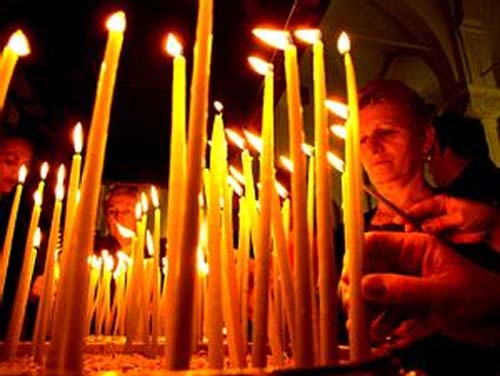
Χριστός Ανέστη!


Orthdodox Christian Cypriots light candles in Panagia Fanromeni church located in the divided capital of Nicosia, Cyprus.


Greek Orthodox pilgrims hold candles with the holy light after an Easter eve mass at the Great Meteoron monastery in Meteora, central Greece April 23, 2006.

Wednesday, April 19, 2006

California State Senate - Resolution on Cyprus

From the Press and Information Office (PIO):

California State Senate - Resolution on Cyprus

The California State Senate adopted Resolution 24 on the Cyprus problem on 15 March 2006, which was introduced by Senator Alquist. The Resolution states, inter alia, that “a lasting, just, peaceful and mutually agreed upon solution to the Cyprus problem would greatly benefit the security and the political, economic and social well-being of all Cypriots”, and notes that it could contribute to improved relations between Greece and Turkey, and would serve the interests of the United States interests in the region”. The Resolution makes reference to the Annan Plan, and notes that it “was rejected by an overwhelming majority of Greek Cypriots in a free, democratic and fair vote, since it did not sufficiently address their basic concerns”. It states also that the Republic of Cyprus took together with other EU countries the decision in December 2004 to permit Turkey to begin EU accession talks in October 2005, recognizing that Turkey must abide by the EU principles and that “this will significantly contribute to the development of a secure and economically robust Eastern Mediterranean and offer the prospect of providing a new context to resolve the longstanding division of Cyprus”. It notes that Cyprus has announced and is implementing a series of economic and other measures “to reach across the island’s internal division and benefit the Turkish Cypriots living in the Turkish occupied areas of the Republic” and points out that Cyprus “has as a goodwill gesture unilaterally initiated a program to clear more than 2,300 mines in eight minefields in the buffer zone dividing the island”. Commending the people of Cyprus for their continued efforts in search of a just resolution of the Cyprus problem, the Resolution calls on the President and the Congress of the United States to continue their historic support for the reunification of Cyprus, while fully respecting that the Government of the Republic of Cyprus is the only legitimate sovereign authority for the entire island of Cyprus. - 19.04.2006

Tuesday, April 18, 2006

Turkey's chief prosecutor seeks charges against Cypriot writer

The Attorney Generals Office of the Republic of Turkey wants to file charges against Mr. Serhat Incirli, a columnist for the Turkish Cypriot daily AFRIKA, for insulting the Turkish Republic. Outrageous! Columnist Serhat Incirli is a Turkish Cypriot who is currently living in London, England. You can read about this story here.

Monday, April 17, 2006

[Poll] Turkish ports & Cypriot vessels

Tip for this poll: Hover mouse over question or possible answer to make it scroll sideways.


Create polls and vote for free. dPolls.com

Cyprus in NATO?

The title of this post seems pretty implausible to me, but then again, I am not the one who had the meeting with the U.S. Under Secretary of State Nicholas Burns. Take a look at this article from GreekNews and decide for yourselves.

Under Secretary of State Nicholas Burns, and Assistant Secretary Daniel Fried, Meet with Greek American Leaders --
Washington, D.C.- Leading members of the Greek expatriate community ascertained that the United States is determined to inaugurate a "new beginning" in efforts to solve the issue of Cyprus, following a meeting they had at the State Department with Assistant Secretary of State Nicholas Burns and Deputy Assistant Secretary of State for European Affairs Dan Freed.
read more »

Saturday, April 15, 2006

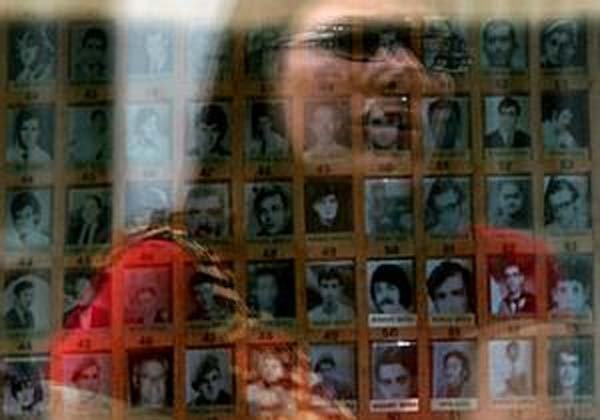
Missing Cypriots


A photo (taken on 13.04.06) of a woman is seen reflected in the portraits of Greek Cypriots who have been missing since the 1974 Turkish invasion.

Thursday, April 13, 2006

A Worthy Cause

I recently read this story that talks about a worthy cause, and if you google the term "Hellenic Cardiac Fund" you will see that it is, indeed, a worthy cause that you may want to help out. For 27 years, the Hellenic Cardiac Fund has helped Greek children overcome the most complex congenital heart problems. Most recently, it has helped Asimina from Macedonia, Greece. When she was seven months old, she developed what appeared to be a cold … but this was no ordinary cold my friends. Asimina began experiencing severe shortness of breath and stopped eating. As her condition worsened, the family was referred to the Hellenic Cardiac Fund. The organization was able to bring her and her parents to the children’s Hospital Boston located in the United States. There it was discovered that this precious little girl had a very dangerous ailment – a huge cardiac tumor. Her parents were in distress as this tumor was the type that was known to cause sudden death to children. But their sorrow would soon turn into exquisite joy when Children’s Hospital world renowned cardiologists and surgeons teamed to remove the killer-tumor. Asimina and her parents have now returned to Greece. She is one of the over 800 children who are living better lives today because of the intervention of the Hellenic Cardiac Program at Children’s Hospital Boston. I’m sure you all know there is a tradition among Hellenes to assist those in need. It is a long, unbroken line of caring and giving that is a source of great pride. If you want to find out how to help this organization, below is the contact info:

Bess Pappas
Director, Hellenic Cardiac Fund for Children
300 Longwood Avenue
Boston, Massachusetts 02115 USA

Monday, April 10, 2006

Το μισό και πλέον Κυπριακό

ΣΗΜΕΡΙΝΗ: «Το μισό και πλέον Κυπριακό»

Η Αυστρία επαναφέρει θέμα Αμμοχώστου

Θέμα Αμμοχώστου σε διασύνδεση με το απευθείας εμπόριο, όπως αυτό ερμηνεύεται πλέον από την Ε.Ε. και όχι από την Τουρκία, ετοιμάζεται να επαναφέρει η αυστριακή Προεδρία.

Σύμφωνα με πληροφορίες, η Λευκωσία έχει έρθει σε σχετική συνεννόηση με τη Βιένη για επαναφορά της πρότασης που προνοεί επιστροφή της Αμμοχώστου, άνοιγμα του λιμανιού της πόλης και συνδιαχείρισή του υπό την εποπτεία των Βρυξελλών.
read more »

Friday, April 07, 2006

Date set for Orams decision

From The Cyprus Weekly:

Decision in Orams case on invasion anniversary

EXCLUSIVE

By Philippos Stylianou

ON THE anniversary of the Turkish invasion this summer, the London High Court will deliver its final judgment on the controversial Orams case, which is expected to have an enormous effect on the future of Greek Cypriot refugee properties in the occupied areas.

Lawyer Constantis Candounas, who has asked the High Court to enforce a decision by a Cypriot court ordering David and Linda Orams from Hove, Sussex, to return land property to his client Meletis Apostolides, said the trial had been set for July 18, 19 and 20.

The action, under an EU regime making possible the enforcement of court decisions of one member state in the courts of another, was filed on December 21, 2005 and, besides being the first of its kind in the UK, it became even more controversial when the Orams retained the legal services of Cherie Blair QC, wife of the British Prime Minister.

Candounas told The Cyprus Weekly that he attended a hearing at the High Court with the Orams’ solicitors on March 1, 2006, during which the Court gave instructions for Apostolides’ expert witnesses to submit their evidence by March 29.

The Orams were to reply within a week, which they did, and then the lawyers of both sides were given two weeks to meet together.

Not easy

Called by The Cyprus Weekly to say if the date coinciding with the 32nd invasion anniversary carried any special significance, Candounas said it was very fortunate that they could get such an early date.

He explained that it was not easy to find a time slot suiting the lawyers of the two sides and the High Court judges.

Cherie Blair tried to get a postponement until Linda Orams’ appeal to the Cyprus Supreme Court against the ruling of the court of first instance was heard, but the High Court rejected this, as it could have taken as long as a year to 18 months.

Leading the UK legal team for Meletis Apostolides against Cherie Blair and other lawyers from the Matrix Chambers, will be Thomas Beazley QC, of Blackstone Chambers, with Simon Congdon of Holmans Fenwick Willan Solicitors and another QC from Brickstone Chambers.

Unaware

Linda and David Orams claimed they had bought Apostolides’ property in Lapithos, near Kyrenia, in good faith from a Turkish Cypriot without being aware of the legal and political implications and build a luxury villa there.

The Nicosia District Court ordered them to demolish the villa and return the property to its rightful owner. In the face of the Orams’ refusal to comply with the decision and being unable to enforce it because of the Turkish occupation in northern Cyprus, Apostolides can ask to have the judgment executed against the Orams’ UK property.

The British High Court will not review the merits of the case but will decide on matters of procedure and public policy.

The development has slowed down the arbitrary sale of Greek Cypriot refugee properties in the occupied territories, mainly to UK nationals, which had reached alarming proportions.

It would be no exaggeration to say that the High Court decision will seal the fate of the Greek Cypriot refugee properties either way.

Thursday, April 06, 2006

What kind of Justice is this?

Below is an article (05.03.06) by columnist Sener Levent from the Turkish Cypriot daily AFRIKA. The translated English version was found on the Cyprus PIO website. An exceptional article worth reproducing it here in its entirety. The following is the full text of the translated English version with original spelling, grammar and punctuation:

In fact the tragedy of the Greek Cypriot community is graver than the tragedy of the Turkish Cypriots.

Just think about it

This country is under occupation for the last 32 years and unfortunately they (Greek Cypriots) were unable to explain this occupation to the world. They were unable to force neither the UN, nor the EU and nor the other International organizations to take strong and effective sanctions against the occupier.

On top of it after so many years of occupation the Greek Cypriot side was put on the accused and guilty chair.

The occupier was declared innocent and those who were under occupation guilty.

For this an Annan Plan and a referendum was enough

All of a sudden the occupier was declared favoring peace and settlement and those who are under occupation against peace and solution

What kind of Justice is this?

Do you know the biggest opponents of the settlement in Cyprus?

The biggest opponents of the settlement in Cyprus are those who say that the obstacle for the solution is Tassos Papadopoulos.

This is an understanding that totally denies the political will of the Greek Cypriot community and it is a propaganda that for a long time now is being systematically injected to everybody. And unfortunately some Greek Cypriot intellectuals are being knowingly or unintentionally became an instrument to this propaganda. The peoples will expressed during the referendum totally are ignored and huge 76% no is attributed to Papadopoulos. It means that Papadopoulos `no´ had no effect. In fact it had harmed the Greek Cypriots. I wish he would have said `yes´ during the referendum. Because at that time peoples `no´ would have been better understood.

He then comments on a recent poll that 48% of the Greek Cypriots said no to living with the Turkish Cypriots. Sener Levent justifies the Geek Cypriot no and says that if he was a Greek Cypriot his answer was not going to be different when the Turkish Cypriots brand the 20 July invasion as liberation and keep silent when return of Varosha is in question or when they usurp immovable property that belong to the Greek Cypriots and sell them with illegal title deeds to foreigners in the north.

Survey Conducted by CyBC

The Greek Minister of Foreign Affairs, Ms. Dora Bakoyannis, on Tuesday said the Annan plan is history and any new initiative would have to be within the European Union framework.

Ms. Bakoyannis, who is currently on a 3-day official visit to Cyprus, said "The Annan Plan, as it was submitted for approval by the Cypriot people, was rejected. From the moment it was rejected, it was history." She went on to say "(The Cypriots) desire a fair and viable solution within the EU framework and we should work toward this direction."

The foreign Minister’s visit coincided with the publication of a poll that was conducted by the CyBC showing most Greek Cypriots have doubts that reunification will occur any time soon. The poll showed that an even greater majority reject the Annan plan. Some 50 percent want a completely new plan while 34 percent favor drastic changes to the Annan plan. The foreign press, however, will be focusing on this part of the poll ... given the chance, 48 percent of Greek Cypriots would rather live separately from the Turkish Cypriots compared to 45 percent who back coexistence. Beware, the pro-Turkish foreign media will not miss a chance to castigate the Greek Cypriots. Allow me to give you a preview ... Shame! The Greek Cypriots do not want to live with the Turkish Cypriots. This is Tassos doing with all his rhetoric; the Greek Cypriots don’t want peace. Some reading this post may say where is your proof of this so called biased foreign media? When was the last time you read an article on Cyprus that mentioned the previous rejections of UN plans by Turkey and the occupied North? When was the last time you read an article on Cyprus that mentioned Turkey’s violation of UN and Security Council resolutions regarding its occupation and colonization of Cypriot territory? There is your proof. If this survey was done in a period where Cypriots believed the UN plan was actually workable with a strong central government ... then the poll results would have been completely different. Now, take a look at this snippet from a recent report by the BBC:

Some wonder quietly if the threat of formal recognition of the north could push the Greek Cypriot side back to the (Annan Plan) negotiating table.


No need to wonder anymore, the CyBC poll results tell us it would have quite the opposite effect. Are the polling results good news for the Turks? Hardly. Cyprus support for Turkey’s EU accession is based on reversing the crimes committed by Turkey and allowing refugees the right to return home. Turkish columnists love to point this out ... those wily Greek Cypriots are using the EU to corner us! Notice how the Turks do not mind how they use their troops to force their own compromise on us but complain when the government of RoC seeks EU help for a compromise to reunite the war divided island nation. If Turkey’s stance leads to separation of the two communities then there is no reason for the Cypriots to support Turkey’s EU accession. The reaction to this by some Turks may be ... If EU talks are suspended over Cyprus, then so be it. I think it is fair to say that Turkey’s EU membership bid means a lot more to a Turkish Kurd than it does to a Turk. Recent reforms were granted to the Kurds in order to appease the EU. I would like to ask Mr. Semih İdiz what the current riots in Turkey’s south-east would look like if Kurds knew that Turkey was not going to be a part of the EU?

Tuesday, April 04, 2006

The Gladio

Here is an interesting article from the Turkish Daily News which talks about a special war department that may or may not be linked to Turkey’s shadowy Deep State. This is a significant read because, to my knowledge, the existence of such a department has never been acknowledged before by the Turkish Government. The article mentions Turkey's Minister of National Defense Vecdi Gonul stating this special department "shouldered important responsibilities" in the lead-up to the Cyprus invasion.

Sunday, April 02, 2006

Τιμή στην εξέγερση της ΕΟΚΑ

Είδηση απο Phileleftheros:

Δοξολογίες και κατάθεση στεφάνων Με ευλάβεια η Κύπρος τιμά την μεγαλειώδη εξέγερση της ΕΟΚΑ

Λευκωσία: Ο κυπριακός λαός τιμά σήμερα την 51η επέτειο της έναρξης του αγώνα της ΕΟΚΑ και με πανηγυρικές δοξολογίες και εκδηλώσεις μνήμης, αποτείει ελάχιστο φόρο τιμής σε όσους αγωνίστηκαν και έπεσαν για την απελευθέρωση της Κύπρου από τον βρετανικό ζυγό. Στον καθεδρικό ναό Αγίου Ιωάννου Λευκωσίας εψάλη στις 10 το πρωί πανηγυρική δοξολογία, χωροστατούντος του Χωρεπισκόπου Τριμυθούντος Βασιλείου. Στις 11 τελέσθηκε στα Φυλακισμένα Μνήματα τρισάγιο για τους ήρωες του απελευθερωτικού αγώνα της ΕΟΚΑ και ακολούθησε κατάθεση στεφάνων.

Στη δοξολογία στον καθεδρικό ναό Αγίου Ιωάννου παρίστατω ο Πρόεδρος της Δημοκρατίας, Τάσσος Παπαδόπουλος, ο οποίος στη συνέχεια κατάθεσε στεφάνι στα Φυλακισμένα Μνήματα.

Πανηγυρικές δοξολογίες ψάληκαν και στις υπόλοιπες ελεύθερες πόλεις της Κύπρου. Δοξολογία για την εθνική επέτειο της 1ης Απριλίου ψάληκε το πρωί και στον Μητροπολιτικό ναό Αθηνών. Τον πανηγυρικό της ημέρας είπε ο υφυπουργός παρά τω προέδρω, Χριστόδουλος Πασιαρδής.

Wednesday, March 29, 2006

Palace of Trojan War hero found

Archaeologist links 3,200-year-old Greek island palace with Ajax, hero of Troy
By NICHOLAS PAPHITIS

ATHENS, Greece - Among the ruins of a 3,200-year-old palace near Athens, researchers are piecing together the story of legendary Greek warrior-king Ajax, hero of the Trojan War.

Archaeologist Yiannis Lolos found remains of the palace while hiking on the island of Salamis in 1999, and has led excavations there for the past six years.

Now, he's confident he's found the site where Ajax ruled, which has also provided evidence to support a theory that residents of the Mycenean island kingdom fled to Cyprus after the king's death.

"This was Ajax' capital," excavation leader Lolos, professor of archaeology at Ioannina University, told The Associated Press on Wednesday.

"It was the seat of the maritime kingdom of Salamis - small compared to other Mycenaean kingdoms - that was involved in trade, warfare and piracy in the eastern Mediterranean."

Ajax was one of the top fighters in the legendary Greek army that besieged Troy to win back the abducted queen of Sparta, Helen. Described in Homer's Iliad as a towering hero protected by a huge shield, Ajax killed himself after a quarrel with other Greek leaders.

On a wooded hill overlooking the sea at Kanakia on Salamis' southwestern coast, Lolos' team has excavated a town surmounted by a fortified palace complex.

The site flourished in the 13th century B.C. - at the same time as the major centers of Mycenae and Pylos in southern Greece - and was abandoned during widespread unrest about 100 years later.

Scholars have long suspected a core of historical truth in the story of Troy, and archaeological evidence from the Kanakia dig appears to agree.

Lolos also believes that, faced by an external threat, part of Salamis' population left for Cyprus, founding a new town named after their homeland.

"There is no other explanation for the creation on Cyprus of a city named Salamis," he said. "We established that there was a population exodus from Salamis, which was completely abandoned shortly after 1200 B.C. ... They must first have gone to Enkomi on Cyprus, which was already an established center."

Salamis was founded around 1100 B.C., when Enkomi - some 4 kilometers (2.5 miles) away - was abandoned. "It was probably the refugees' children that moved there," Lolos said.

The emigration theory would explain why almost no high-value artifacts were found at the Greek site, which bore no signs of destruction or enemy occupation.

"The emigrants, who would have been the city's ruling class, took a lot with them, including nearly all the valuables," Lolos said.

The rest of the population moved to a new settlement further inland that offered better protection from seaborne raids.

Kanakia, was first inhabited around 3000 B.C. The Mycenaean settlement covers some 5 hectares (12.5 acres), and features houses, workshops and storage areas.

So far, archaeologists have uncovered 33 rooms in the 750-square-meter (8,000-square-foot) palace, including two central royal residences containing what appear to be two bench-like beds.

"This recalls a reference by Homer to the king of Pylos sleeping at the back of his house," Lolos said.

Finds include pottery, stone tools, a sealstone and copper implements.

Lolos is particularly pleased with a piece of a copper mail shirt stamped with the name of Pharaoh Ramses II, who ruled Egypt from 1279-1213 B.C.

"This is a unique find, which may have belonged to a Mycenaean mercenary soldier serving with the Egyptians," he said. "It could have been a souvenir, a mark of honor or even some kind of a medal."

Excavations will continue in September, while future targets include the settlement's cemetery, which Lolos has located nearby.

Situated just off the coast of Athens, Salamis is best known for the naval battle in 480 B.C., when the Athenians defeated an invading Persian fleet. The ancient playwright Euripides was born there, and a cave excavated by Lolos in 1997 has been identified as a hideout where the poet composed his work.